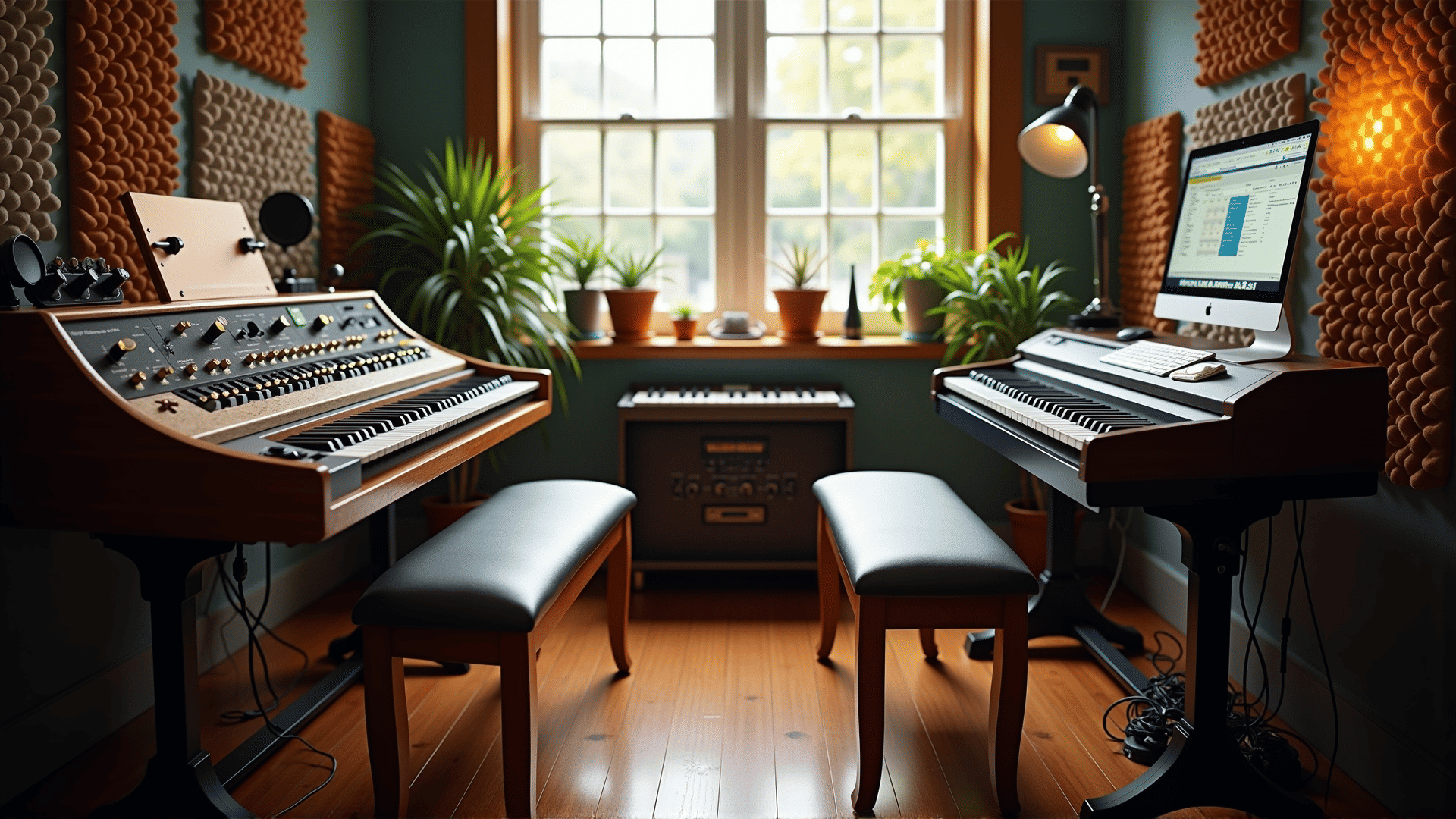
Keyboards have played a pivotal role in music production, evolving significantly over the centuries to cater to the ever-changing landscape of sound. From the majestic pianos of the classical era to the highly sophisticated digital keyboards of today, this versatile instrument remains at the heart of many compositions across various genres. This article explores this fascinating evolution and offers insights into integrating a wide array of sounds into your musical creations.
The journey of keyboards in music production can be traced back to the invention of the harpsichord, an instrument that laid the groundwork for the modern keyboard. Although limited by its inability to change dynamics, the harpsichord was a staple in Baroque compositions. Its influence endures as it paved the way for the invention of the piano in the early 18th century, which revolutionized music with its expressive range and dynamic possibilities.
By the 19th century, the piano had firmly established itself as a cornerstone of both classical and popular music. Composers like Beethoven and Chopin expanded its repertoire, exploring its melodic and harmonic capacities and pushing its technical boundaries. The piano's profoundly expressive potential endeared it to audiences and artists alike, solidifying its position as a favorite in both concert halls and home parlors.
The 20th century marked the dawn of a new era with the invention of electronic keyboards and synthesizers. The introduction of the synthesizer, especially with the arrival of the Moog in the 1960s, opened up a vast universe of sound possibilities, allowing musicians to craft entirely new auditory landscapes. This era saw keyboards transition from pure acoustic instruments to electronic devices capable of producing a variety of sounds and emulating other instruments.
Furthermore, the digital revolution of the 1980s and 1990s brought about MIDI technology, which allowed for seamless communication between electronic instruments and computers, heralding a new age of music production. This innovation enabled musicians to create complex compositions with layers of intricate sounds, fostering the development of genres such as electronic, pop, and hip-hop.
Today, contemporary keyboards offer an impressive array of features. Modern digital workstations and MIDI keyboards provide composers with expansive libraries of sounds, ranging from classical instruments to cutting-edge electronic tones. These instruments are equipped with user-friendly interfaces, allowing musicians to manipulate and layer sounds, apply effects, and develop their unique sonic signatures.
For those looking to incorporate a variety of sounds into their compositions, it is essential to understand the capabilities and constraints of each keyboard type. Acoustic pianos offer unparalleled authenticity and dynamic range, ideal for emotive and nuanced performances. In contrast, digital keyboards and synthesizers provide versatility, often enabling the user to emulate the sounds of different instruments or even craft entirely new ones through sound design.
Aspiring musicians should experiment with combining acoustic and digital sounds, blending the rich tonal quality of a grand piano with the limitless possibilities of a synthesizer, to create innovative compositions. Leveraging digital audio workstations (DAWs) can also enhance this integration, facilitating the layering and modification of sounds to suit artistic visions.
In conclusion, the evolution of keyboards in music production is a testament to the enduring importance of this instrument. By embracing both classic and contemporary approaches, musicians can expand their creative horizons, achieving new heights in musical expression. The fusion of traditional craftsmanship and modern technology continues to inspire, ensuring that keyboards remain integral to music-making in the years to come.